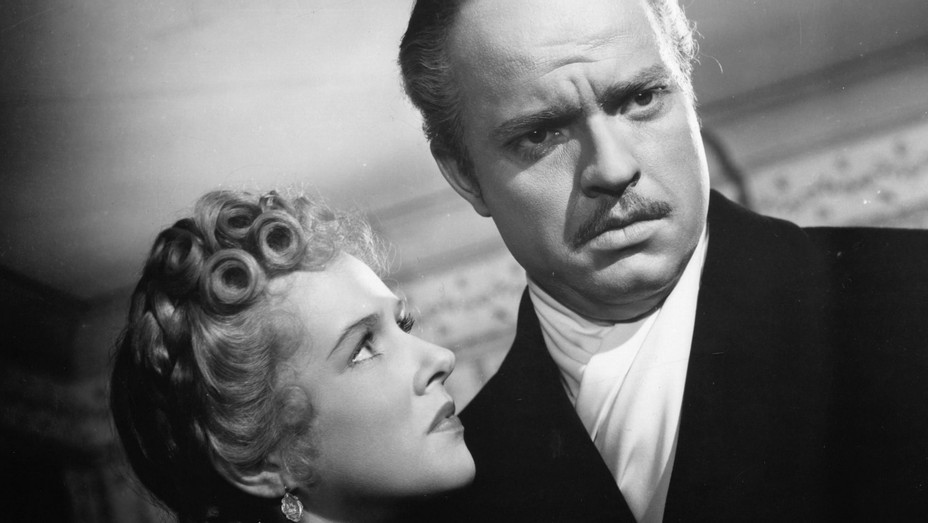
I don’t know if you’ve heard, but a lot of people think that Citizen Kane is a good movie. Hailed by critics as one of the best movies of all time, Citizen Kane has held a pretty comfortable spot at the head of the film canon for quite some time now. But, unlike some of the truly masterful films of our times like Hot Rod, I had never actually seen, nor even met someone who had seen, this lauded film. So I decided to do some digging and see what all this fuss was about.
Citizen Kane was released in 1941 and was produced, directed by, and starring Orson Welles, of Paul Masson Wine fame. Welles was a hot commodity at the time thanks to his famous “War of the Worlds” radio broadcast, where he fooled a bunch of radio listeners into thinking aliens had invaded New Jersey. RKO Studios gave Welles $500,000 and the keys to the studio, giving him almost complete control over the project. Welles brought on his friend Herman J. Mankiewicz to help him write what would become Citizen Kane. Kane is a study of Charles Kane, a millionaire newspaper man who is himself loosely based on the Gilded Age media baron William Randolph Hearst. And boy does this one start with some twists.
After a quick opening scene where Kane dies (the movie is 80 years old, so I’m not sorry for the spoilers), the film cuts to a newsreel. The newsreel turns out to be an obituary, announcing the death of Charles Kane, newspaper magnate, millionaire (it was more impressive back then), philanthropist, and political kingmaker. As the newsreel goes along, it says all the impressive and important things Kane did in his life and the circumstances of his death. But as the reel ends, the movie cuts to a few men in a dark room who had just been watching the newsreel too. As they start talking, you realize these men are journalists, tasked with making the obituary newsreel for Charles Kane. Having just watched the draft with you, they begin reflecting on their work.
This introduction does a few things really well. By showing the audience the obituary as the journalists are reviewing it themselves, the newsreel works diegetically – giving you information about the movie world within the world itself. The obituary pulls you in and places you alongside the characters of the film, watching with them instead of just watching them.
But Welles has even more tricks up his sleeve. The other interesting aspect of the intro will require me to reference Tropic Thunder. You’ve seen it. Don’t lie. When you first saw Tropic Thunder – in theaters of course – you’ll remember that the film doesn’t start with the action of the plot. Instead, it runs a few fake trailers for upcoming films, starring the movie versions of Jack Black, Ben Stiller, and Robert Downey, Jr. (Still waiting for Scorcher VI Total Meltdown).
Now, as you watched Tropic Thunder in theatre on opening night, you were rightly a little confused at this point. The “real fake” trailer for a film like The Fatties: Fart 2 makes you think “wait, is this real?” And this unease, the unease you felt sitting in the theatre for Tropic Thunder on Wednesday, August 13, 2008 is the exact feeling Welles was going for. A movie-goer in the 1940s would have expected a few important newsreels before a feature film. So by adding a fake newsreel in front of his movie, Welles is trolling his audience, trying to trick inattentive viewers into thinking this Kane guy really died. While modern audiences may not fall for – or even understand – this little move, it’s heartening to see Welles sticking with his guns here and trying to pull one over on us.
Welles pulls another cute trick at the end of the film. After the journalists talk to Kane’s former friend, business manager, and his second wife, they meet in the last scene at Kane’s abandoned mansion, Xanadu. They talk for a bit about what they found and what it all means. In the end, they throw their hands up and comment on how hard it is to truly convey the life of a person in a short, newsreel film. Welles here speaks to us right through these fellow filmmakers. Just as these journalists were trying to distill Kane’s life into a newsreel, Welles too was following the same project – trying to tell us about the life of Kane. In the end, after all we’ve seen, Welles says through these characters: “Well, we’ll never really know about this Kane guy, will we?” Even in the final moments of the film, Welles tries another twist on the audience. What a troll.
Even in its less cheeky moments, Citizen Kane does have a lot going on for it. Many cinematographers credit the film as mastering new styles, like deep focus and low angles. The film also uses one of the first jump scares.

CAW! Well, it looks like these things work better in film.
But it’s not all plaudits from me. I mean, first things first, it’s in black and white. Yeah, the film is older than diet soda, but is color too much to ask? It also doesn’t pass the Bechdel Test, and has some pretty cringey representations of minorities throughout. Another dig is that the film, by its nature, falls into something I call the “Sad Old ManTM” trope. Let me explain. Kane’s troubled childhood left him unable to build meaningful relationships later in life. Emotionally unavailable to his friends and his wives, Kane fills his life with other, always-expanding pursuits. He builds a newspaper empire, dabbles in politics, schmoozes with Hitler, builds a pleasure palace: all normal guy stuff. But, at the end of the day, he pushes everyone away, leaving himself a Sad Old ManTM, alone in his shallow kingdom of worthless possessions.
While this story arc can be impactful, it can also be tricky. It’s particularly hard to make a movie where the third act – where your main character is wallowing in their own misery – doesn’t drag on for too long. How long do people really want to watch Welles as a Sad Old ManTM shit-talking his second wife and destroying parts of his pleasure palace? In a way, it’s about pacing. For example, let’s look at Scorsese and The Irishman. The entire movie, De Niro debases himself in service first to the mob and then for a time Jimmy Hoffa. As a result of his loyalty to his craft (killing people), his relationship with his family – specifically his daughter – deteriorates into shambles. After a long career of loyally killing people for his boss, you just have De Niro for the last hour or so of the movie, an empty husk of a man, contemptible, wandering around on screen, mostly alone. And while The Irishman has taken flack for being long, Scorsese’s choice to focus so much on the Sad Old ManTM De Niro really drives home a core theme of Scorsese’s entire career: how devastating and dehumanizing a life of crime is for these men.
Old Kane is a lot like old De Niro, woodenly stumbling through the end of the film, sad and alone. But then again, I don’t really feel any sympathy, or even pity, for Kane. Throughout his life, Kane didn’t pull the trigger to really kill anyone, unlike De Niro. But in many ways, Kane’s body count is probably much higher. He used his incredible power and influence to push the US into the Spanish-American War, kicking American imperialism into overdrive and leading to decades of bloody American occupation of the Philippines. He was also seen in the movie hob-nobbing with Hitler… Actual Hitler! While De Niro’s character is a monster to be sure, he is just a man. Kane, on the other hand, has a firm grasp on the levers of power, and his mommy and daddy issues plunge countless humans across the world into unfathomable suffering. I can’t muster a tear for Kane – this Sad Old ManTM really deserves every ounce of misery he gets.
So what do we owe to Kane, or Citizen Kane or any of those famous classics? Well, I invite you to treat them just like most of you will treat this blog post. Don’t even look at it, but when I ask what you think, say it’s very impressive.
 For The Love