It was the autumn of 1991. George H.W. Bush was president of the United States, The Jerry Springer Show had just made its television debut, and Nirvana’s Nevermind was setting the music world on fire. And, in an undisclosed location in the highlands of Scotland, The Boy Who Lived began attending Hogwarts School of Witchcraft and Wizardry.
That’s right, this year marks the 30th anniversary of the start of Harry Potter’s magical education. As those familiar with his story will recall, Harry was a solid, yet unexceptional student, excelling in some areas while struggling in others. There was one place, though, where The Chosen One was brilliant from the jump: the Quidditch pitch. He was so good that he was the first first-year player to play for his house’s team in 100 years, and was instrumental in returning the Quidditch Cup to the Gryffindor common room for the first time since Charlie Weasley’s heyday over half a decade prior. There’s little doubt that Potter was one of the best players ever to set foot on Hogwarts’ grounds.
Or…was he? Are we sure Harry was actually deserving of the acclaim he received for his athletic exploits? To borrow a Bill Simmons idiom, was he underrated, overrated, or properly rated?
There’s only one way to find out – a good old fashioned deep-dive. Let’s get to the bottom of this, watch out for the grindylows on the way down.
Let’s start with a clear point in Harry’s favor: making the house Quidditch team as a first year is basically unheard of. It had been generations since any Hogwarts student had managed the feat, and Harry earned his spot on the team in spectacular fashion:
In addition to that being an incredible catch (seriously, that route was Coco Crisp-esque), Harry flashes some great intangibles by sticking up for poor Neville Longbottom. That’s a sign of a guy you know will develop into a leader in the locker room. It’s no wonder Professor McGonagall immediately put away her wizarding crossword puzzle and raced outside to make sure Harry ended up on her team.
From his first match, Harry made sure his impact was felt. He overcame some next level sabotage (from a teacher no less!) to catch the Snitch in his debut, and followed that up with the fastest capture in Hogwarts history in his second match. But, Harry missed the third and final match of the season with the Cup on the line:

Gryffindor ended up suffering their worst defeat in 300 years. While, on one hand, that showed Harry’s immense value to his team, it also revealed Harry’s greatest weakness on the Quidditch pitch: not being on the pitch at all.
That first year would be a microcosm for Harry’s Hogwarts playing career: There would be constant sabotage by anyone and everyone, from Draco Malfoy, to Dementors and house elves, to the Hogwarts faculty and staff, to Lord Voldemort himself. There would also be spectacular catches, and plenty of winning. But, there also would be a lot (and I mean A LOT) of missed matches. If the best ability is availability, Harry was stunningly unavailable, often at crucial moments in Gryffindor’s title pursuits.
In fact, Harry missed 4 of 13 possible matches during his time at Hogwarts, and didn’t finish two more. That’s a stunning 47% of matches that were either incomplete or missed entirely. In other words, whether Harry would show up to/play a full match of Quidditch or not was a literal coin flip. Some of those absences and DNFs were warranted, like the aforementioned Ravenclaw match at the end of his first year, or when Dementors infamously crashed the party during the first match of his third year, causing Harry to fall off of his broom.
Others were less justified. Take Harry’s fifth year, when he (along with Fred and George Weasley) got into a Malice at the Palace-style post match brawl with Malfoy and other Slytherin team members, resulting in a season long suspension. Or, consider Harry’s sixth year, when he managed to end up in detention for the final match of the season, with the Quidditch Cup on the line. Granted, the latter instance was also an example of Snape being a real dick, but maybe Harry should have avoided slicing Malfoy up in the girls bathroom? Regardless of whether the punishments fit their respective crimes, there’s no debate that Harry’s proclivity towards trouble came at the expense of letting his teammates down. He’s basically Draymond Green, but instead of repeatedly whacking dudes in the groin, Harry preferred bareknuckle boxing under the bleachers.
Another tally in the “Harry was overrated” column: he always had the best broom on the market. While the Weasley twins had to make d0 with hand-me-down Cleansweep Fives, Harry was constantly gifted top of the line equipment by mysterious benefactors. Professor McGonagall, in a move that almost certainly violated whatever rules the Ministry of Magic’s Department of Magical Games and Sports had against improper benefits, bought Harry his Nimbus 2000. That broom was unmatched, before the Nimbus Racing Broom Company unveiled the Nimbus 2001 the following year. Even considering Malfoy bought the whole Slytherin team the new Nimbus model, Harry still (to the best of anyone’s knowledge) had a better broom than any other non-Slytherin player.
After Harry’s Nimbus 2000 was destroyed by the Whomping Willow in his first match of his third year, he upgraded to the Firebolt, again thanks to an anonymous donor. After playing roughly one and a half matches without the very best broomstick available to the public, Harry had an arguably unfair equipment advantage once more. Unsurprisingly, his most successful season (his third year, where he played in every match and led Gryffindor to the Quidditch Cup) coincided with this new broom. Sure, Harry was a talented flyer, as evidenced by his performance against Professor Flitwick’s flying keys, or that time he zipped circles around a Hungarian Horntail in what was possibly the worst sporting event for spectators ever (or at least until the Second Task that winter):
That doesn’t totally erase just how much of an advantage Harry’s brooms likely gave him on the pitch. If you need any more evidence on how even naturally gifted athletes can still benefit from a boost, just check out Barry Bonds’ Baseball Reference page, specifically starting around the year 2000. I’m not saying Sirius Black is on the same level as Victor Conte, but I’m also not NOT saying it.
However, perhaps the biggest, smokiest gun that serves as the final nail in the “Harry Potter was overrated” coffin has to do with one, simple stat: Harry, despite being a part of three Quidditch Cup winning teams, was only an active participant in one. Due to those previously discussed circumstances in his fifth and sixth years, Harry was sidelined for three of six possible matches those seasons, and left another match early due to injury.
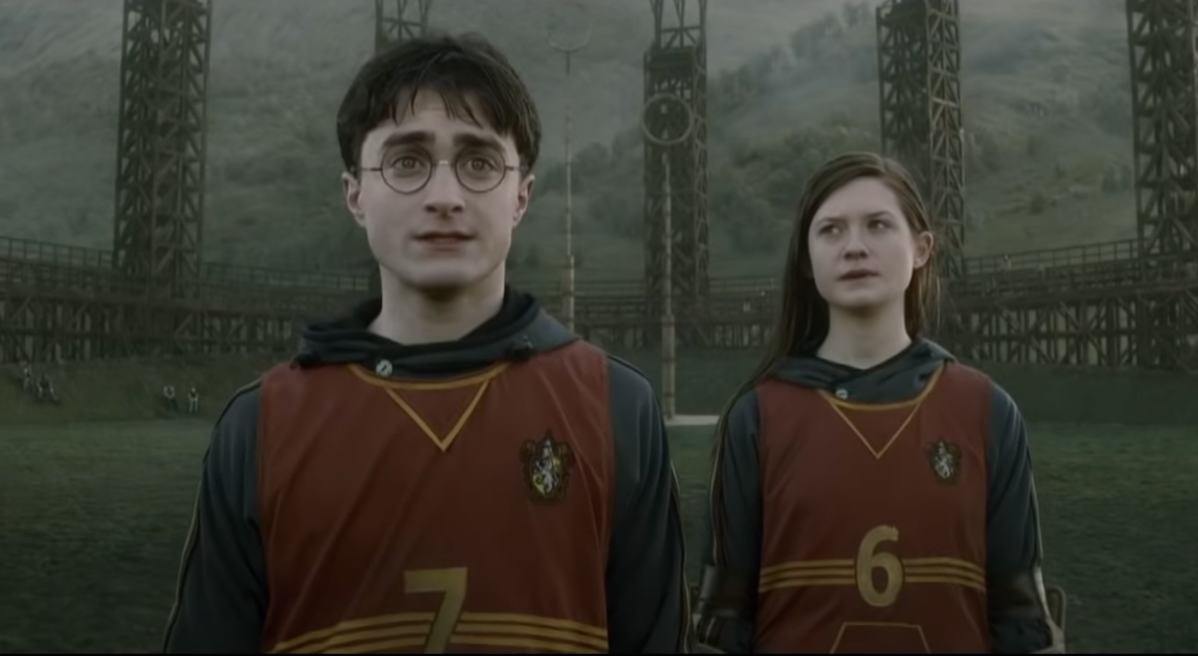
Enter Ginny Weasley. Ginny filled in for Harry at Seeker during his suspension, catching the Snitch in both matches. The first catch was instrumental toward keeping Gryffindor’s point differential manageable, setting up her Cup clinching catch against Ravenclaw in the season finale. One could argue pretty convincingly that Ginny’s fourth year performance topped Harry’s third year showing, especially considering the circumstances. By all accounts, the 1993-94 Gryffindor Quidditch team was stacked, with all seven members (Harry, Oliver Wood, Angelina Johnson, Alicia Spinnet, Katie Bell, and the Weasley twins) remaining intact from Harry’s first year. That group was ready to get over the hump and win a title. Ginny, on the other hand, subbed in for Harry on short notice and dragged a team with two backup – and woefully inept – Beaters and a skittish Ron Weasley at Keeper to a Cup victory.
The next season, Ginny excelled at Chaser, a completely different position, before Harry’s off-field activities forced her into Seeker duty for the championship-deciding match. Ginny caught the Snitch, because of course she did, bailing out Harry for the second straight year. As if that wasn’t enough, Ginny also went on to play professional Quidditch for the Holyhead Harpies, becoming the second teammate of Harry’s to go pro. There’s a really compelling case to be made that Harry was never even the best player on his own team, despite having the best broom at Hogwarts.
So what’s the verdict? Was Harry Potter’s Quidditch career worthy of GOAT consideration? Or was he a system Seeker? At the end of the day, Harry’s resume remains impressive. Potter went 7-0 (with seven Snitch grabs) in all seven matches he completed, and was the only recurring member on all three of Gryffindor’s three-peat teams. Harry was also indispensable early on in his career; Gryffindor went 5-o in matches he played in, and lost both matches he either did not complete or missed altogether pretty handily. However, all of those missed matches started to pile up later in his career, and Harry went from young superstar to prime Ewing Theory candidate pretty quickly. Ginny was able to lead comparatively weak teams Gryffindor teams to Quidditch Cup titles while Harry sat on the sidelines, and was able to do it without the benefit of a world class broomstick.
Ultimately, then, the question of whether Harry’s Quidditch career was overrated or not is rendered irrelevant. The correct answer? Ginny Weasley was better anyway.
 For The Love
3 replies on “Seeking The Truth”
Harry, in typical Potter fashion, made the game about himself. No “I” in team bud. With Weasley on the pitch you got unbeatable chemistry.
LikeLiked by 1 person
I’m a hater so naturally I’m team Harry was overrated
LikeLiked by 1 person
[…] It was the first post in this blog’s history (a history that also includes a breakdown of Harry Potter’s Quidditch career and a dissertation of how Real Housewives of New York reflects the decline of American society for […]
LikeLike