
Christy Moore is a living legend. For five decades now, Christy has been a leading voice in the Irish Folk scene, guiding the genre through a renaissance and reinvention. In 2007, he was named the Greatest Living Musician by RTE, and since then he has put out five new albums. An indefatigable legend at that.
So, during this special time of year, as people across the country are scrambling to put on some Real Irish MusicTM during their pre-games and pub crawls, I think it’s a good time to talk about Christy and his music. But, before we get there, we’ll have to talk about the proverbial green elephant in the room: the Irish.
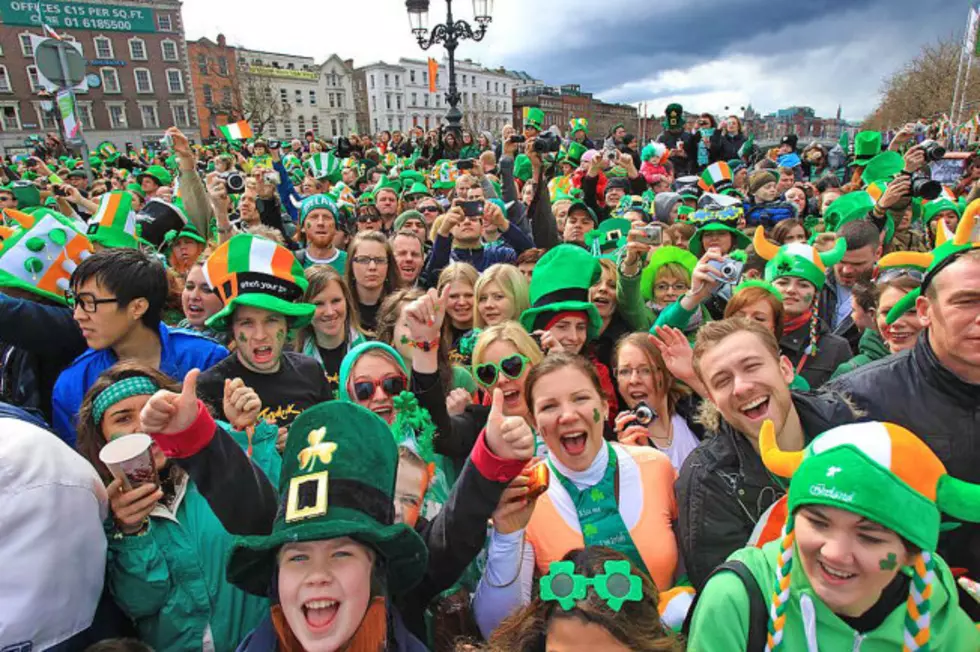
While COVID-19 may put a damper on the celebrations this year, St. Patrick’s Day is typically marked by gaudy parades, drunk people getting in fights at 2:30 in the afternoon, and gaggles of teenagers drinking green beer. But who are these people? Surely the 4.9 million citizens of the Irish Republic aren’t coordinating annual attacks on America’s cities. In fact, although this may be a shock to you, dear reader, many of the people seen sporting green face paint or bright orange wigs are not Irish at all. They are a quite different creature – Irish Americans.
Irish Americans are a strange bunch, running the gambit from the hottest president to whatever the hell is going on in Southie. Often derided as Plastic Paddys for their drunk performances of Irishness, it’s high time we figure out who these people are and why they think corned beef is traditional Irish food. As a born and bred Irish American, I think it’s time to take a look.
Irish people have been coming to and settling in America before America was even a glint in a drunk Tom Paine’s eye. You see, way back in the 1700s, Ireland was for all intents and purposes a colony of the fledgling British Empire. Hundreds of years of campaigning, conquest, and a dabble of genocide, had resulted in complete British control. As the 18th century chugged along, the British used this newfound power to start taking land and commercial power from the native Irish. During this time of the Protestant Ascendancy, Britain introduced the Penal Laws, restricting Irish catholics from owning too much property, holding public office, or even owning a horse worth more than £5.
It was a bad time. Very un-chill of the British. And to make matters worse, the British fortified their exploitative political and economic policies with pseudoscience, racism, and old-timey propaganda. According to the British, the Irish were an uncivilized, barbarous people, quick to drink and fight, and incapable of managing their own affairs. And since the British were taking away all viable economic opportunities and forcing people to work for starvation wages, they could then “prove” the Irish were inferior because, hey look, they are poor.

So, while this period did provide some important cultural touchstones for Irish culture, like Wolfe Tone in the Rebellion of 98 and Daniel O’Connell and the push for Catholic Emancipation, it was also a catalyst for two deeply influential aspects of Irish history – lack of economic opportunities in Ireland, and the spread of anti-Irish stereotypes abroad. These two aspects exploded after 1845, when the Great Famine tore through the country. With Britain offering virtually no support to the starving populace, over a million Irish died with a million more emigrating.
It’s during this period where we see a surge of Irish immigrants coming to America, particularly the major metropolitan areas on the East Coast. But, even as they arrived at the docks, the British had ensured that their reputations had preceded them. In cities like New York and Chicago, many immigrant groups – Irish included – were generally derided by the WASP-y elites. Anti-Irish sentiment was used to block the Irish out of decent jobs and keep them penned into poorly maintained slums. Through the years, Irish immigrants carved out spheres of influence within their new cities – often by acting as a solid voting block for corrupt politicians. Unfortunately, the Irish often used whatever status they could gain to keep down other minority groups – like Italians and African Americans.
Then something crazy happened – the Nazis. World War II supercharged the US economy, and, after the war ended, every other major industrial nation was sifting through the rubble. We were a newly minted superpower. A historically unprecedented wave of prosperity washed over the country. Anyone with a high school education could get a good job, buy a gas-guzzling car, and move to the suburbs. The gradual, grating process of assimilation was turned into overdrive, with the children of Irish, Italian, Polish, and other mostly white immigrants moving out of their respective slums and into the same green-lawned communities.
The formerly robust Irish immigrant communities that had been built to withstand the depravity of the inner-city slums started fraying. Disconnected and dislocated, losing grasp of the unique cultural touchstones that connected them to each other and to their homeland, these groups moved away from seeing themselves as “Irish” and more towards just being plain old “American.”
Americans don’t have culture per se. What we do have, though, is consumption. Think about it. As a nation, some of our most popular places to visit are Times Square and the Las Vegas Strip, physical manifestations of consumerism. Our greatest exports are Coca-Cola, McDonalds, and the Strip Mall. It’s starting to make sense why so many people are upset when you light a Target on fire; to many Americans, this is like burning down the Colosseum.
With our communal bonds of culture replaced by buying, people have ended up feeling adrift. Think of any other time in history that would produce personal genetic companies like 23andMe. People have no sense of connection – to their surroundings, to their past, to themselves. So they will gladly shell out hundreds of dollars to give a private company access to their DNA, just to be told “You Belong.” But what happens then? If I find that I am 83% Scottish, should I go and buy a kilt? Your lived experience doesn’t change based on the results of your cup-spit test. Knowing my ancestors lived somewhere vaguely on a certain island doesn’t mean I now know my ancestors, or that I know anything more about myself. Those unfamiliar names on a family tree don’t give me meaning.

Into this mix is born the Irish American. In the past ten years, different reports have placed the number of Americans with Irish heritage at anywhere from 39 million to 33 million, underlining how difficult and nebulous identity is. Perhaps now three, four, or five generations removed from Ireland, these Irish Americans can have wildly different understandings about what their Irish heritage means. Without strong cultural connections, it becomes fairly easy for marketers to start commodifying aspects of this uncertain identity. If you buy the right beer, or the right shirt, or the right CD, or the right meal, you can solidify your credentials as Truly IrishTM. But there is a catch. There are already people who are really Irish – the Irish! Re-enacting crude, outdated caricatures in an attempt to prove your cultural identity doesn’t just cheapen the actual culture you are hoping to connect with, it also perpetuates those stereotypes to be continually used against actually existing Irish people – many of whom aren’t big drinkers, leprechauns, or even *gasp* white people.
I think some Mexican Americans can sympathize with this situation. They too have had an arbitrary day picked out of their calendar, puffed up past all significance, and then shoved back at them in the guise of ugly stereotypes and binge drinking. Is our heritage nothing more than a cheap pitch to sell me novelty drinks and possibly offensive headwear? Between my Ancestry.com page and my “Pog Mo Thoin” t-shirt, can I not just buy my identity?
A while back, Christy wrote the rollicking jam “Lisdoonvarna” – a sort of love song for the great folk festival held in the Clare town. Although the festival hasn’t been held in decades, the song still holds onto that atmosphere. The mood is light, the jams are rocking, and everyone is having a good time, even though the party may have ended long ago. And through the track, you can feel the audience vibing right along with Christy, laughing at the jokes, yelling the chorus.
In this and many other songs, Christy creates an eclectic community of people just having a good time. Whether it’s the nuns in disguise partying alongside the BBC reporters and Arab Sheikhs in Lisdoonvarna, or the impromptu jam session described in Jockster Goes to Stutgart, Christy can bring people together with a smile and a tune.
Throughout Christy Moore’s catalogue, he works through issues of identity, loss, belonging, and community. The diaspora is such a fundamental part of Irish history, with so many native sons and daughters having to go abroad to find work and make their own way. His songs about emigrants and immigrants help give color and clarity to the often murky nature of identity. Most importantly, his songs offer a shared language to help bridge the divides between groups of people – those abroad and at home, north and south.
Listening to Christy doesn’t make me more Irish. It certainly doesn’t make me any more American. But sharing his music – and the joy it brings – with those close to me can do something else. It can bring us together. It can help us build a little community. And that’s something you can’t buy.
 For The Love