There’s a case to be made that “College”, the fifth episode of The Sopranos‘ first season, is the most important television episode of the last 25 years. For those who need a refresher, it’s the episode where Tony takes Meadow on a few college tours in Maine, while Carmela stays home and has an almost-dalliance with Father Phil during a thunderstorm. While in Maine, Tony spots a former rat of his mob Family at a gas station, and, because this is what the mafia does, the trip turns from a fun father-daughter bonding weekend into a vengeance mission that ultimately concludes with Tony strangling the rat (named Febby Petrulio) in Petrulio’s own witness-protection-gifted backyard.
It’s arguably the best episode from arguably the greatest TV drama of all-time for a myriad of reasons. Most crucially, though, “College” was the birth of the television antihero. Series creator David Chase famously fought for the scene where Tony whacks Febby to remain in the episode after HBO execs, worried that viewers would no longer sympathize with Tony, pushed back against it. The scene stayed, cementing the show’s main character as a despicable human being who you still, against all odds, couldn’t help but find yourself rooting for. It’s a template that spawned dozens of imitators in the years to follow, from womanizing ad execs to high school chemistry teachers turned drug kingpins. Thus began the era known as “Peak TV”, where antiheroes became the standard protagonist for any and all prestige programming.
Recently, the antihero trope has evolved, seemingly as a reaction to the superhero stories being told on the big screen. While Tony Stark and Steve Rogers were busy squaring off against Purple Josh Brolin in the biggest movie ever, television and streaming services started applying the lessons learned from Tony Soprano and Don Draper to costumed hero concepts. Shows like HBO’s Watchmen and Amazon Prime’s The Boys all ask the same question at their core: What if these superheroes had to, ya know, exist in the real world (or at least something approximating the real world)? Would they actually be people worthy of adulation? In other words, we’re living through the rise of the anti-superhero genre, a logical evolution from Peak TV’s antiheroes.
Each show has their own way of interrogating our society, through their own perversions of the superhero narrative. Watchmen pulls the Cold War critiques of the original 1986 graphic novel into the 21st century, as showrunner Damon Lindelof took on themes of white supremacy and consumerism. The Boys hits on consumerism as well, and posits that if superheroes in our modern media were as famous as they would actually be, they might not be the cuddliest characters to sidle up to. Even Marvel is getting in on the action: Their latest Disney+ entry, The Falcon And The Winter Soldier, features morally grey Bucky Barnes and dark Captain America/US Agent John Walker. Those commentaries have merit, and not just with regard to the Marvel Cinematic Universe. They’re a timely critique of the world we live in today, where the criminal justice system is under constant scrutiny, with society more willing than ever to question the motives and actions of law enforcement. After all, with great power comes great responsibility, and if Homelander is willing and able to vaporize everyone in his path, what does that say about the mere mortals in authority?
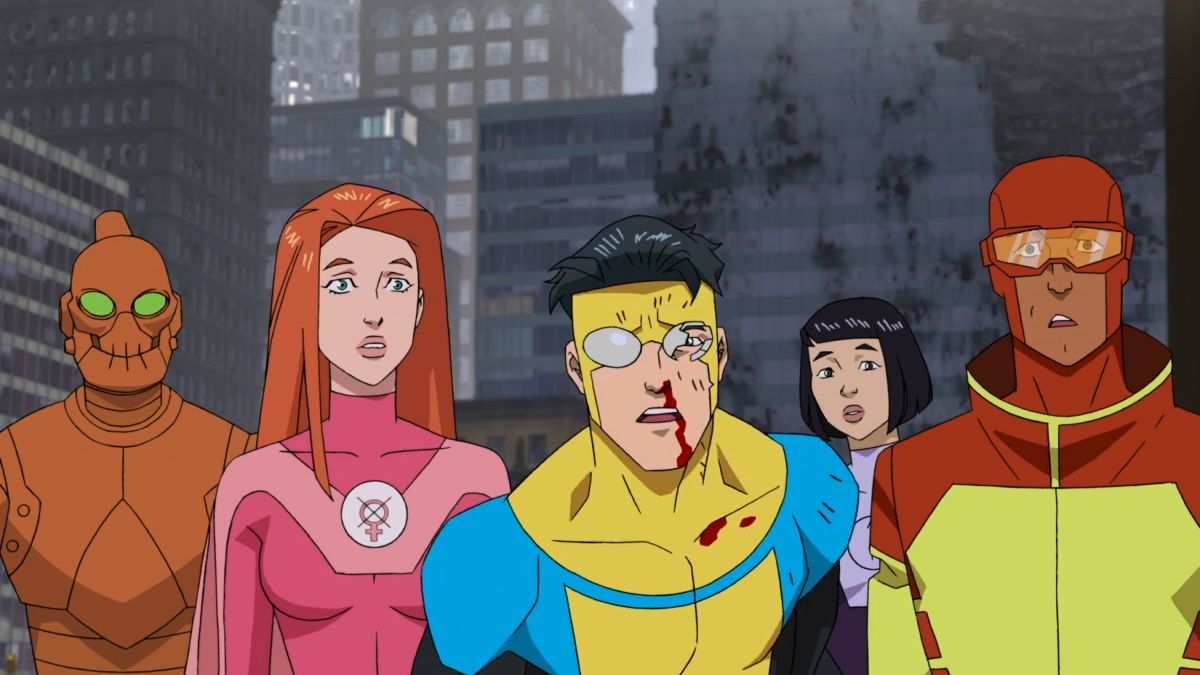
This is all a sort of long winded way to say I recently caught up on Invincible, Amazon Prime’s latest entry into the anti-superhero genre. Invincible is based on the Image Comics series of the same name, and while I am not super familiar with the comic book narrative, I can confirm that season one of the TV series is quite good. This is a (mostly) spoiler-free post, so I won’t get into too many specifics. But what I enjoyed most about this show was how it accurately depicted the ramifications of having borderline god-figures fighting crime, alien invasions, super criminals, etc. Invincible is a shockingly gory show, and that makes sense. When you have this much raw power blended with massive crowds and high stakes, normal people aren’t just going to get hurt, they’re going to be obliterated.
Additionally, when you have superheroes in the embryonic stages of their training and abilities, like protagonist Mark Grayson, mistakes are going to be made and battles are going to be lost. The heroes of Invincible never ever have an easy go of it, which can be occasionally frustrating at times for someone brought up on the MCU narrative cadence, where Iron Man or Thor or Spider-Man eventually prevail. In Invincible‘s premiere season, success is never a guarantee, which makes for a pretty intense viewing experience. Each fight or perilous situation actually has consequences, unlike the standard superhero battles we’ve grown used to, where haymakers are thrown without any visible damage, or where an entire country is wiped off the face of the earth with little to no second thought. Those repercussions often play out in memory-searing ways. Those who have already watched the show would be familiar with those moments simply by referring to them by name, like “The First Post-Credits Scene” or “The Train Scene”.
The subversive elements aren’t the only reasons to give Invincible a shot, though. There are plenty of more traditional thematic structures that give this show a specific, endearing nature. There’s the classic coming-of-age aspect of Mark Grayson/Invincible’s journey, including the aforementioned superhero struggles as well as a Peter Parker-ian juggling of newfound responsibilities with teenager stuff (High school! Girls! Maintaining friendships! Working at the local burger chain!). There’s the all-star cast that reads almost too good to be true: JK Simmons, Sandra Oh, Walton Goggins, Jon Hamm, Steven Yeun, Jason Mantzoukas, Gillian Jacobs, Mahershala Ali….and more. There’s thrilling action scenes, humor, and depth to every character. There’s mystery, murder, intrigue, and excellent twists (the main one of which is the basis of the whole inclusion of this show as an anti-superhero narrative, and I’ll leave it at that) along the way. And, there’s arguably the greatest hook in TV history at the end of the first episode. Again, this is a spoiler-free review, so I won’t say exactly what that hook entails. But make sure to watch through the credits of the first episode, and if that doesn’t make you want to rip through the next seven installments, I don’t know what else to tell you.
Invincible isn’t perfect. Rolling Stone critic Alan Sepinwall’s review actually hit the nail on the head of the show’s biggest problem: similar to the first season of HBO’s Barry, there’s quite a bit of thematic whiplash as the story flips from some of its lighter elements to its heavier stuff. It also lulls a tiny bit in between some of the bigger, flashpoint moments. But, at the absolute minimum, it’s a really fun ride that fits in perfectly with the building anti-superhero Peak TV momentum being fostered by some of our biggest content creating entities. Don’t be turned off by the show’s animated medium, or by any preconceived genre notions you might have. Invincible rocks, and worth the watch. If nothing else, I’m excited by the show’s challenge to the rest of the genre to continue telling compelling stories. There’s clearly plenty of room in the sandbox for more of that.
 For The Love