With the World Cup wrapping up in fantastic fashion, and the start of the EPL season right around the corner, we’ve entered the inevitable stage in The Discourse™ where pundits wax poetic about how this time, surely, soccer has really caught on in America.
If you spent any amount of time watching the World Cup in public this year, you likely heard the familiar canards of American viewers reconnecting with the beautiful game for the first time in four years.
There’s the endless debate about what mysteries of the offside ruling. The common complaint that, paradoxically, nothing in this damn sport ever happens, but that, when something does happen, I wasn’t looking. And, as always, the exasperation over the fact that a 90 minute game ending in a scoreless tie is a perfectly acceptable result in a serious sporting match.
But despite these complaints, one thing truly stands in the way of America ever truly embracing soccer. That, of course, is the great moral crusade against the beautiful game’s cardinal sin: flopping.
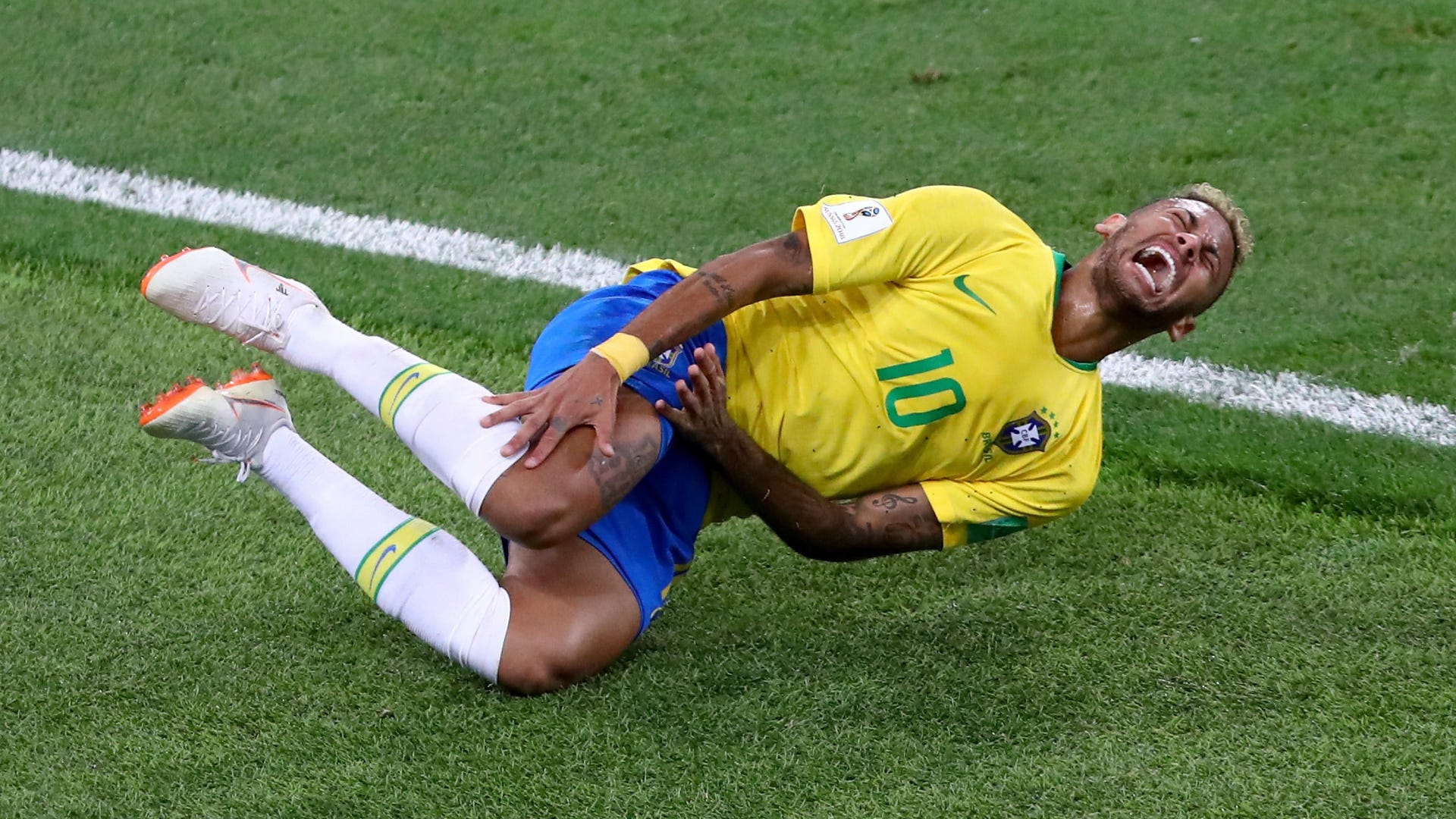
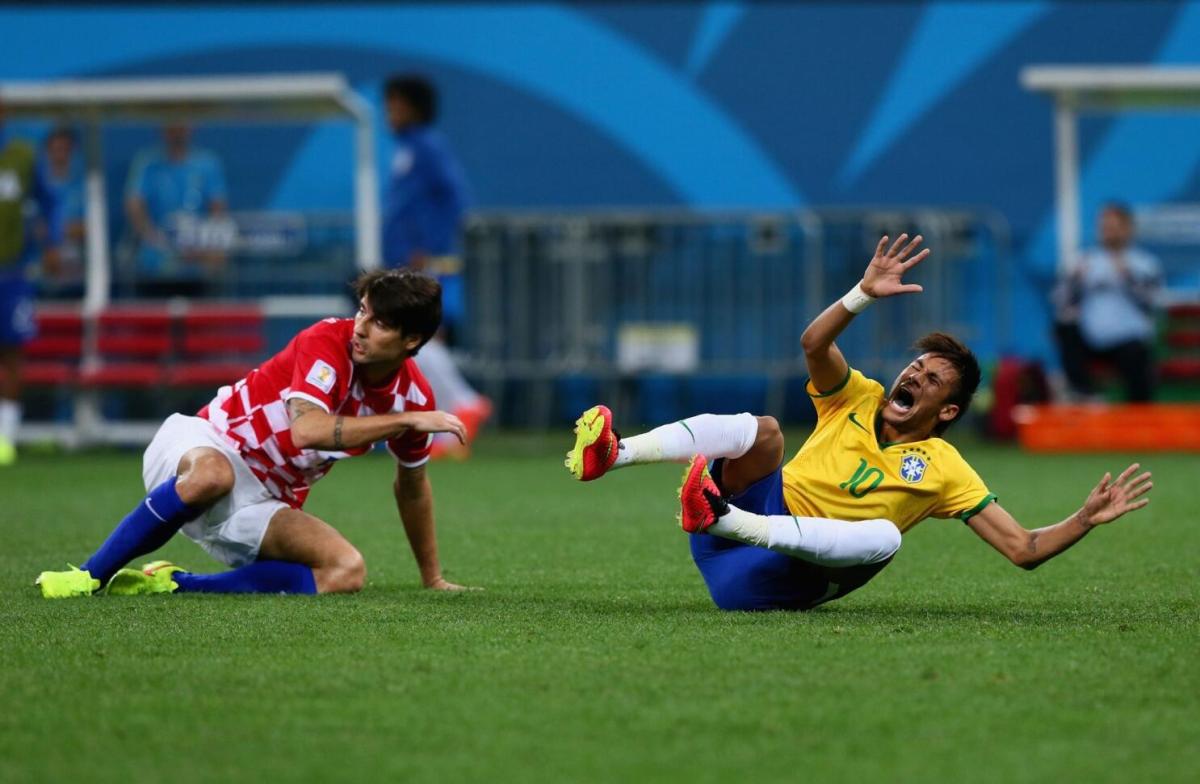
Nothing raises more hackles or sets an American’s blood boiling quite like a player tumbling ass over tea kettle after having their ankle grazed. Americans hate flopping. Any instance will raise immediate objections from casual viewers and new fans. These denunciations are mixed with confusion and disgust:
“What is he falling down for? Did anyone even touch him? Why do they always try this stunt?”
What I am interested in here is not flopping in and of itself. For anyone who has seriously watched any high level soccer for any amount of time understands flopping as a legitimate part of the game – it is a well documented, tactical phenomena. No, instead, I am interested in why do Americans take such a vocal and strident anti-flopping stand? Why, out of all things that even real soccer fans take issue with, is this the reason Americans will never truly take up the world’s game. Let’s discuss.
Briefly here, let’s talk about flopping in its own right. Flopping is a tactic used by players to gain an advantage, either by drawing a foul, slowing the pace of the game, wasting time, or psychologically priming the ref or the opponent. At its most basic, the opportunity cost for drawing a foul can be huge. Need to score? Embellish the contact that has been made and you can potentially gain a valuable set-piece opportunity. Holding on to a lead? Roll around for a bit in pretend agony and let precious time tick off the clock as the opponent complains and the ref adjudicates. Its a big pitch, there is a lot going on, and you only have to convince one guy that what just happened was a foul. In all honestly, given the parameters of the game, there should really be more flopping going on.
In recent years, flopping has gained more prevalence outside of soccer, especially in the NBA. New rules penalizing flopping have had mixed results, but speak to the generally accepted belief of players across sports that drawing a foul through a flop is a legitimate tactic. While perhaps a bit unorthodox, and even looked down upon by purists, it is no more rule bending than bunting or the fake punt – playing around with the rules of a game system to gain an advantage.
Why, then, the American anger against the flop?
The first reason is obvious on its face but requires some more unpacking. Flopping, broadly speaking, is lying. Nobody has ever been fouled so hard in soccer to elicit these reactions. And, lying, broadly speaking, is bad. The simple moral logic that puts flopping as unequivocally bad is tempting. It reinforces some of our country’s most basic beliefs about ourselves, our society, and what sports should be. For many Americans, sport is one of the most visible and load-bearing manifestations of the meritocracy. From high school football all the way up to the Olympics, sports are a clear, easy, at times ruthless way to raise up and reward those with the raw talent and determination to win. Athletes, like singers, actors, and titans of industry, sit atop the proverbial food chain because they are the best. Why did the Dodgers give that guy a billion dollars? Because he can hit a ball the farthest, simple as.

But, let me tell you something, as anyone who has watched any amount of Friday Night Lights would know, its not that simple. Sports, surprisingly enough, are a part of society, which itself is subject to (gasp!) systemic inequality, market pressures, and the historical baggage of racism, patriarchy, and a whole host of other words you will no longer find on a .gov site.
Back to soccer, for example. The reason the USMNT is perennially underperforming isn’t because of a lack of athletic youths, but instead its a market problem. American soccer academies are not incentivized to create world-class talent that can compete at the top level; instead, they are incentivized to hold on to kids whose parents can pay top dollar.
In basketball and football, the inputs are a bit different but the dynamic is the same. For decades, powerful institutions, like the NCAA and athletic departments at major universities, leveraged the financial precarity of young athletes to sucker them into generating literal billions of dollars in profit for those institutions, practically for free. Athletes put their bodies and futures on the line for the promise of potential gainful employment after a set number of years of service. While this system has undeniably surfaced great talent over the years, it invariably comes from the limited population of young people who had no other viable alternative. Less a system of rewarding those with the skills to advance than the exploitation of a vulnerable and desperate group.
So, the charge that flopping is bad because it cheapens the game feels a bit disingenuous when the institutions who uphold the game have abandoned any pretense to a moral high ground. But the disgust directed at Flopping also feels cheap because it cuts against the grain of a great American tradition: our adoration of cheaters.
America loves cheaters. Outside of sports, PT Barnum and Frank Abegnale are veritable folk heroes. A sizable chunk of the electorate are currently engaged in a death cult led by one of the great grifters of our time, even as lower level grifts have spawned seemingly endless content over the last decade. In the world of sports, Pete Rose and Bill Belichick are still beloved, despite their well documented history of bending the rules. And while baseball’s Hall of Fame voters will make great hay over the sanctity of the game, all of the steroid era records remain in the books untouched.
In large part this is a basic framing problem. In the cases cited above, cheaters are cast as “complicated” figures, whose mix of cunning and determination will drive them to do whatever it takes to achieve glory and greatness. In this way, flopping could be easily woven into this proud tradition of American sport cheaters. The reason why this hasn’t happened gets to the very root of America’s aversion to flopping.
Flopping, like everything else these days, comes down to gender. In looking at the substance of the complaints logged against flopping, such as they are, they draw heavily on gendered language. In the first instance, flopping is a sign of weakness. For viewers who refuse to break kayfabe, a flopper is essentially just a wuss. They can’t take a hit. The histrionics are embarrassing. The flopper should really just toughen up and take it like a man. The epithets lobbed at the flopper make the gendered reading of this situation pretty explicit.
Taking this a step further, the theatricality of flopping is taken as a personal failure. The inability to control the emotion or hide the feeling of pain is an immediate no-no for American sports fans: see the lionization of the stoic baseball player who gets plunked and calmly takes his base. Floppers, paradoxically, relish in the display – the more they seem genuinely hurt the better.
Flopping may be aligned with the American affinity for cunning and deception, but flopping itself has already been gendered. In this way, complaints against flopping serve as a synechdoche for the larger misgivings that America has for soccer more generally. For my fellow countrymen, a hearty plurality, if not a downright majority, will always believe that soccer is too effeminate, too European, too full of scrawny guys under 5’6” with strange accents and unorthodox haircuts kicking a ball around for an hour and a half. For these viewers, there is a preconceived notion of what, exactly, the American athlete should be: strong, big, fast, powerful, physical, tough. In essence, manly. That soccer players don’t conform to these gendered stereotypes – and actively debase themselves through their flopping – means they just cannot be accepted by the American sports fan.
Ironically enough, this ridiculous framework is reinforced by the dominance of the United States National Women’s Team. As one of the most successful teams across the history of international sports, the USWNT has built a legacy of greatness by winning championships against the best the world has to offer. That success, in some ways, has strengthened the gendered stereotypes at play: the USWNT is so good at soccer because soccer is feminine. With this framework in place, the American sport fan is doing a double disservice. Soccer is a gendered and cast aside, and any widespread support of the USWNT has to contend with this engrained understanding of the sport.
So, despite the fact that Americans did come together over this summer in their shared hatred of Alexi Lalas, there is very little chance that they will continue to engage with soccer in a meaningful way, in part because of this gendered framework. The one silver lining, then, is that the solution to making soccer go mainstream is fairly straightforward. We don’t need to fix our academy system, or ink any major broadcasting deals, or even keep signing over the hill European stars to MLS teams. No, all we have to do is smash the patriarchy.

